Blog

Making a vision board

This is the group that goes and read health 50% at Medlefors, they have worked doing vision boards.

A vision board is a tool used to help clarify, concentrate and maintain focus on a specific life goal. It is a sort of board on which you display images that represent whatever you want to be, do or have in your life.

A creative way of getting your wishes and goals of the future from your head out to a paper and pictures.

They started first to write down some words that will be there words of value in life: for example LOVE, TRUST, COURAGE, FOCUS ON GOALS, JOY….

Then they used papers to take out words and pictures that will representat what they want in there future. After that they talk and showed there vision boards for the rest of the class. During the work music were used too increase the creativeflow!!

Best wishes!

Ann-Charlott Medlefors

Listening,feeling, expressing

The group of ANTIGONE in Greece is creating…..art!

We listen to each other, we feel others’ work, we express ourselves through arts. And all started 2 years ago, when we first met. And now, it continues after our meeting in Skelleftea, where we learnt how to use our senses, feel the things, travel to painters’ mind.

Alternative Routes to Success!

ARTS in Skelleftea Sweden

Our purpose for the activity in Sweden were to show how we work with Alternative Routes To Success in Sweden and Medlefors Folkhighschool.

We want to share some of the material that we have with you. Read below or download as documents.

Swedish workshop


Folkbildning in Sweden

Swedish folkbildning is the collective name for the activities conducted by the country’s folk high schools and study associations in the form of courses, study circles and cultural
activities. Folkbildning is a part of the liberal non-formal educational system. Every year, several million Swedes participate in folkbildning activities.


Folkbildning – for lifelong learning

People want to learn and develop in many different contexts in all phases of life. Swedish folkbildning meets this need – and thereby contributes to societal development and growth. But folkbildning also has an intrinsic value because well-informed and active citizens constitute the core of democracy.

Folkbildning is open to everyone in society. In folkbildning, everyone participates on equal terms, but based on different conditions.

People seek knowledge and development through folkbildning for various reasons. All of these reasons are meaningful – regardless of whether it is a question of personal development, increasing the chances of finding a new job, or simply a desire to learn.

In study associations and folk high schools, opportunities of lifelong learning are provided through a rich offering of courses and educational programmes – everything from study
circles where a small group meets a few times in their leisure time, up to multi-year, full-time courses of study at folk high schools.


Concept of folkbildning

Folkbildning grew forth at the beginning of the last century in a Sweden where the level of education was low and large groups of the population were excluded from higher education. Folkbildning became the answer to people’s longing for knowledge and desire to influence societal development.

Folkbildning is still borne by the idea of a society with small educational rifts. There are always people, who for various reasons need alternatives to the formal educational system.
Here, folk high schools and study associations have their most important mission, based on the fundamental right of all citizens to knowledge and development.

Folkbildning is a part of the liberal non-formal education sector and is free from detailed national control. This freedom, like the strong ties to the non-profit sector, makes folkbildning a force of societal change.

The ideas of folkbildning are noticeable not least in its practical activities, through dynamic interaction with the participants. Folkbildning has the following characteristics:

  • It is always voluntary for the individual to participate in folkbildning.
  • The participants have considerable opportunities to influence the content of the activities.
  • Folkbildning is characterised by an environment in which learning and social interaction go hand in hand. The circumstances and experiences of every participant are taken into account.
  • Folkbildning contributes to strengthening civil society through close co-operation with volunteer organisations, associations and various types of networks.


10 study associations

In Sweden there are currently 10 study associations to which the Swedish National Council of Adult Education distributes grants. The study associations have different profiles and emphases in their activities. There are close connections between the study associations and the Swedish popular movements, such as disabled, immigrant or environmental organisations. The study associations are located throughout Sweden.

The study circle is the most important form of study in the study associations. In the study circle, a small group meets to learn together based on a plan of study and with a study circle leader. There are study circles in hundreds of different subjects. Some have a more theoretical emphasis, such as language, history and studies in current social issues. Others are more practically oriented, such as dance, woodworking, instrumental music and so forth.

The study associations are also Sweden’s largest arranger of cultural events. By arranging cultural events and lectures, the study associations contribute to a rich cultural life throughout the country.


150 folk high schools

Sweden’s current 150 folk high schools are spread throughout the country. Folk high schools offer courses for adults from the age of 18. Many folk high schools are run by popular
movements, such as organisations within the workers’, temperance or Free Church movements. Others are operated by county councils or regions. The schools have different
profiles and emphases in their activities. The folk high schools are not guided by national curricula, but instead are free to shape their activities on their own.

The length of the courses varies from a few days up to several years. The long-term courses are generally 1-3 years, some of which can provide knowledge equivalent to upper secondary school and thereby also qualify participants for university studies. Many long-term courses have a special emphasis – music, media, keep-fit measures, tourism and so forth. A few are vocational, such as the youth recreation leader and journalist training programmes. Short courses are offered in a number of different subjects and emphases.

Tuition at folk high schools is characterised by process-oriented pedagogy, in which active participation by the students is emphasized, such as in the form of theme and project work in small groups. Many adults apply to folk high schools and therefore considerable weight is placed on taking advantage of their previous experiences and using their needs as a basis of
tuition.

Many folk high schools are boarding schools, which allow students to live at the school during the course. Tuition is free-of-charge and students can apply for financial aid for their
studies.


Public support for folkbildning

Swedish folkbildning is largely financed through funding grants from the state, county councils and municipalities. There is a broad political consensus that the state should provide
economic support to folkbildning.

The Riksdag (Swedish Parliament) has established overall objectives for the activities. They can be summarised such that the activities of folkbildning shall:

  • strengthen and develop democracy,
  • make it possible for people to influence their life situation and create participative involvement in societal development,
  • bridge educational gaps and raise the level of education and cultural awareness in society,
  • broaden the interest for and increase participation in cultural life.

Based on these objectives, the study associations and folk high schools are free to shape thegoals of the activities on their own.

In 2006, a unanimous Riksdag decided on the folkbildning policy of the future. Seven activity areas were emphasized as motives for state support of folk high schools and study
associations. This applies to efforts to protect society’s common fundamental values, the challenges of a multicultural society and the demographic challenge of increasing numbers of elderly, and where the possibilities of life-long learning must be maintained. Furthermore, the importance of cultural activities is emphasized, as well as the significance of reaching people with disabilities. Lastly, support for folkbildning is motivated by the meaningful efforts in public health and for sustainable development and global justice, pursued in the study associations and folk high schools.


The Swedish National Council of Adult Education

The Swedish National Council of Adult Education has been charged by the Government and Riksdag of Sweden to distribute the national grants to folk high schools and study
associations. Furthermore, the council shall follow up and evaluate the activities of folkbildning.

The Swedish National Council of Adult Education has three members, all of which have close ties to study associations and folk high schools. These are:

  • The Swedish National Federation of Study Associations – an interest association for the study associations.
  • The Interest Organisation of Popular Movement Folk High Schools, RIO – which gathers the folk high schools operated by popular movements and other organisations.
  • The Swedish Association of Local Authorities and Regions, SKL – which represents the folk high schools operated by county councils and regions.

Current figures on folkbildning (2008)

Every year, the study associations arrange:

  • Approximately 285,000 study circles with a total of almost 2 million participants
  • Approximately 250,000 cultural programmes with more than 15 million participants

Every term, the folk high schools have:

  • Approximately 26,500 participants in extended courses
  • Approximately 80,000 participants in short courses

Public grants to folk high schools and study associations in 2008:

  • From the state: approximately EUR 328,565,000
  • From county councils: approximately EUR 82,496,000
  • From municipalities: approximately EUR 42,517,000


Links

More information is available on the Internet:

  • The Swedish National Council of Adult Education, with information about folkbildning in general, including information in English and other languages: www.folkbildning.se
  • The Information Service of the Folk high (FIN), with information about the courses offered by all folk high schools and links to their websites: www.folkhogskola.nu
  • The Folkbildning Net, a common digital conference and e-mail system for all of folkbildning, which is used for flexible learning: www.folkbildning.net
  • The Folkbildning Net’s pedagogical resources, with links to websites, articles, study materials, project descriptions, multimedia, etc. within life-long learning: www.resurs.folkbildning.net
  • The Swedish National Federation of Study Associations, an interest association for the study associations, with links to the respective study associations:  www.studieforbunden.se
  • The Interest Organisation of Popular movement Folk High Schools (RIO) which represents the folk high schools operated by popular movements and other organisations:
    www.rorelsefolkhogskolor.se
  • The Swedish Association of Local Authorities and Regions (SKL), operators’ association for the folk high schools operated by county councils or regions: www.skl.se

Download:  Folkbildning in Sweden as a pdf document


Swedish Folkhighschool


Swedish Folk High School

  • A part in the swedish education system
  • 154 Folk high schools in Sweden
  • As an adult you can catch up elementary school, Upper secondary school and qualify for higher education
  • The education is based on the students’ needs, previous knowledge and experience
  • Independent
  • Free of charge
  • 18 year old and more
  • General Courses
  • Special Courses
  • Vocational Courses


Medlefors Folk High School

  • Folk high school courses since 1949
  • Today around 60 employees
  • Owners; the association of Norrlands labour movement
  • About 300 students on long term courses
  • General Courses
  • Profile: Health, wellness and Working environment
  • Special Courses
  • Lifelong learning – senior students (< age of 65)
  • Short courses eg. for members of the trade unions
  • Summer courses

Download:  Swedish Folkhighschool  as a pdf document (presentation)


5 objects in a bag – a workshop with Headway Arts’ Creative Director Allie Walton-Robson

5 Objects in a Bag – A workshop with Headway Arts’ Creative Director Allie Walton-Robson in Skelefteå, Sweden.

Aims:

To begin:

  • to develop and explore creative processes with 5 objects used as stimulus.
  • to find ways of communicating and sharing ideas.
  • intercultural dialogue through the project.
  • break the ice and build trust within the project team.

Method:

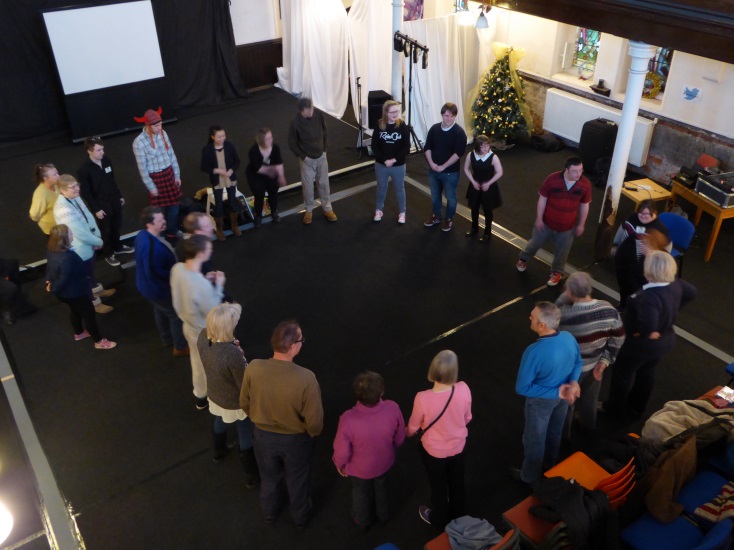
I asked the group to sit on chairs in a circle –  a practical arrangement that we like to work in at Headway Arts. We can all see and hear each other, there is no end or beginning, no one is at the front or back, higher or lower. We are all at the same level physically and in equality.

Each country was asked to bring along 5 identical objects. We placed them ceremoniously in the centre of the circle. The objects looked beautiful. The UK brought 5 handmade bags.

I then invited a volunteer to begin the process of exploring the objects considering all five senses. I encouraged the volunteer to use whichever manner they preferred, maybe or maybe not using words but showing and sharing thoughts with the rest of group in some way. Happily, Fernando from Spain kindly volunteered to begin (a much appreciated thank you!) and so the group began the sensory process of exploring the objects and sharing the personal meanings they provoke.

I asked the rest of the group to observe carefully and respectfully, which they did. The volunteer was given as much time as they wanted for their sensory exploration and then were thanked for their ideas and asked to choose someone else in the circle to pass the object onto. This carried on until everyone in the group had joined in. Some people considered the object offered to them while others swapped it for another from the centre.

When it was Fran’s turn, she deliberately went outside the circle* to find another object (a glass) to illustrate that we must expect the unexpected in our work.

I deliberately asked people not to describe the objects that they had brought along. This allowed everyone to respond and make up their own minds about the objects without being influenced by prior knowledge. (Partners: You may like to add descriptions to this blog now so we can find out the actual stories behind those lovely things?)

In the workshop, people chose to use mainly non – verbal expression: gesture, movement, action, mime. I was very happy to see this naturally happen as it supported those within the group whose first language is not English. As a result, we began to find ways to communicate with each other in a very human way.

Ideally we should have had much more time to explore the objects properly. At the end of the workshop each country chose a bag and placed their objects inside. They then took these away to begin working with them in their own groups.

Evaluation

Q1: what are we learning?

At the end of the session I asked the group to identify what skills they thought they had been using:

Some of the responses were: imagination, discussion, team work, listening and answering, listening to information, communications, working through a process, creative thinking, giving and receiving, taking instructions.

Q2: What conditions need to be put in place for people to progress in their learning?

Some of my notes include:

  • Time – when working with another group I would have had more time and would have slowed down the process.
  • Records – usually I would have taken written notes of everyone’s ideas to remind me what everyone did to ensure that nothing was missed and could be returned to in a future session.
  • Openness to questions – People felt more comfortable performing the task when they were able to check things with questions.

Q3: What can we do to help the learner recognise what they have learned?

Q4: How can we best apply what we are learning to our organisation?

Through sharing: I am sharing this document on the blog so it can be read by others and discussing it within the organisation particularly with others who could not attend the mobility. It will also be available online to external viewers.

What are the next steps?

The next step is to start a process of creating something new within our own organisations using the ‘bag’ as a stimulus.  These can be shown/shared and discussed at our next mobility in Ferrara.

We should look at how we can best organise and interpret the creative ideas that come from the process.

While we are involved in the creative process with our own learners, do keep looking back at the 4 evaluation questions above.

The story continues in Ferrara…good luck!

IMG_1771 (2)

First ARTS Learning Activity in Skelleftea

What did we learn from Medlefors Folkhogskola?

During the first transnational visit to Sweden, Medlefors Folkhogskola introduced us to the unique way they work with their students.

Johanna, a student guidance councillor, began by explaining Medlefors attitude to learning: ‘come as you are, go as you like and leave satisfied.’ She also introduced learners to the concept of ‘folkbinding’- liberal adult education in Sweden which allows lifelong learning for everyone irrespective of age or background. Participation is voluntary meaning that people have the ability to influence their own learning journey and make choices which can benefit them directly. It will be interesting to see how different education systems in partner countries affect what we are able to offer disadvantaged groups.

We learned the types of support that Medlefors offers students. Student guidance councillors, such as Johanna, establish the first point of contact with a student and arrange  meetings where they can get to know students and their specific needs. Johanna then feeds this information back to the rest of the staff at Medlefors, in particular to Special Needs Teacher who plans students’ learning journeys, making adjustments where necessary to create an individual, unique schedule for each person.

ARTS learners were introduced the unique style in which students learn at Medlefors. Many students arrive at Medlefors having made little progress in the traditional education system in Sweden. Firstly, there was a huge emphasis on study aids including audio books, I-pads and Claro read. Students are particularly encouraged to learn using their senses, particularly using Dunnock Dunn’s and Larstil Smodell’s models of learning.

It became clear that using perception and senses at Medlefors is paramount and learners were invited to a lesson with Special Needs teacher Maria to try this out for themselves. Learners listened to Maria reading an extract from a novel and were asked to draw or paint whatever images came to mind. Some amazing images came out of working in this way. Likewise learners were then put into groups and asked to listen to songs from the film version of the same novel. They were then asked to write down how the songs made the learners feel with each individual feeling/emotion written down on strips of paper. These were collected and redistributed amongst each group who then put them together into a poem or pattern. This use of creativity allows everyone to express themselves and is a good introductory exercise for disadvantaged people learning to express themselves within a group.

A unique programme at Medlefors is ‘PULS’ which stands for ‘personal progression and lifestyle’. Students can choose from activities which increase motivation, relieve stress and improve communication skills as part of their weekly school timetable. Activities on offer include yoga, relaxation, physical exercise, cooking, study techniques and self-reflection (setting goals, evaluation etc.). The PULS programme ultimately allows students to express their feelings and opinions and put things into context in alternative ways.

We also learned the Study Circle technique, which is very popular in Sweden particularly with Arbetarnas Bildningsforbund (ABF), one of the owners of Medlefors. The Study Circle technique is a democratic learning environment where the leader is an equal member of the group. No special training is required to be a leader. Courses can be on any topic with the emphasis being on learning, discussion and creating together. We had opportunity to investigate the Study Circle through practical workshops and can now look at how we use what we have learned with our own groups.

A.R.T.S Launch!

Friday 29th January saw the official launch of Headway Arts’ European Project: Alternative Routes to Success (ARTS) with North East Member of the European Parliament Jude Kirton-Darling.

The event began at 4pm with members from the local community arriving at Headway ArtSpace in Blyth. We even had a Live Stream on YouTube so our international partners and people who couldn’t make the event could watch.

Allie, Creative Director at Headway Arts, welcomed the audience and introduced them briefly to Headway Arts’ mission and vision. Allie referred to author Ursula le Guin who said ‘there’s a point around the age of 20 when you have to choose to be like everyone else or make a virtue of your peculiarities’ Allie said at headway arts we like to embrace our peculiarities – we apply our principles of inclusivity and aim to create a place and sense of belonging for people who come to us. We celebrate individuality – having sustained our independence for 21 years by being a unique organisation.

It was then turn for Jude Kirton-Darling MEP to take to the stage. Jude spoke very kindly about Headway Arts’ work:

“Your reputation and your work travels across Europe as well as the UK. The arts and culture sector in the UK consider Headway Arts to be one of those great examples. I think that’s a tribute to all of you who are involved and all of you who work here.”

She then went onto explain the importance of European projects like ARTS. EU projects are about: “people working together to understand each other better. Trying to learn about each other and help to make ‘strangers’ become friends. Learning about what makes us different and what makes us the same. To realise how we can move forward together.”

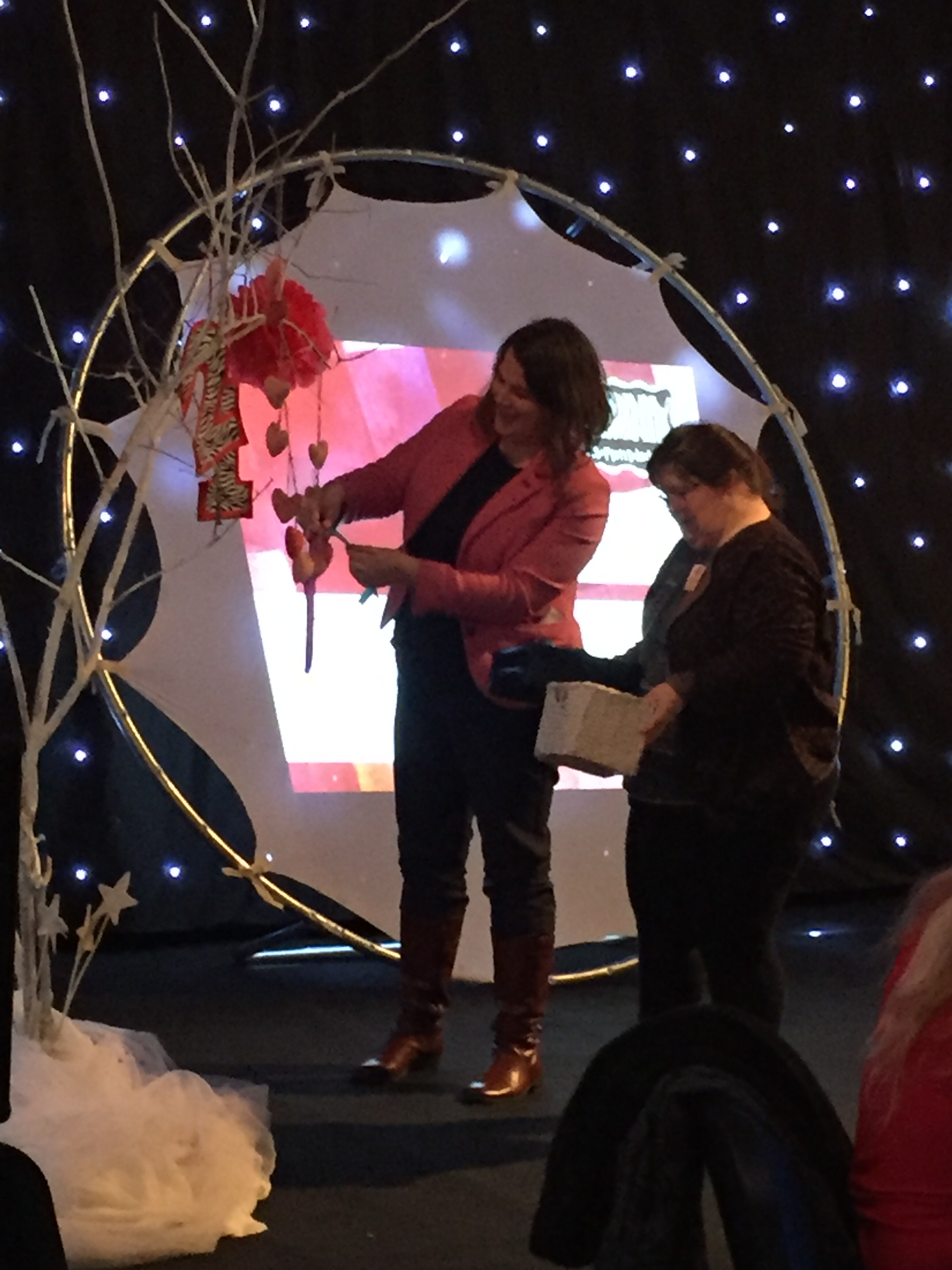
Paula, one of Headway Arts’ Actors, then helped Jude to officially launch by project by offering her a selection of ribbons. Jude was asked by Paula to write her name on a ribbon and tie it onto the wish tree. By the end of the project, everyone involved in it will have added their ribbon to a final creative installation.

Allie then returned to officially present the project:

“ARTS is a life-long learning partnership project which aims to give recognition to people who are disadvantaged through disability and to develop a universal accreditation framework for learning disabled adults in the arts which is accessible to all.”

Allie then introduced the partners: Teatro Nucelo from Italy, Cogami from Spain, Medlefors from Sweden and Antigone from Greece.

Allie explained that the project “will train adult education staff to complete their work on a daily basis in a much stronger way than they currently do.”

Through an array of creative arts workshops, transnational learning activity meetings and seminars, adult education staff will be able to help people to understand what they have learned in more practical ways than ever before.

It is hoped that this learning will create more skills and more opportunities for all organisations involved by bringing value and attention to the fantastic work they already do. It will also improve the confidence, self-esteem and motivation of disadvantaged people by recognising them and their achievements in a formal way. A selection of online resources and contacts will also be created for organisations who wish to adopt the accreditation.

Andy, another of Headway Arts’ Actors, then passionately shared his and his colleagues’ experiences of Headway Arts and their past European projects with the audience.

Andy spoke specifically of how Headway Arts helps himself and others to express themselves in ways they usually wouldn’t – “It’s good to be asked what I think. Otherwise we have nothing”.  He also described how Headway Arts gets people out of their houses and help them to realise they can have a fulfilling life of their own – “Sometimes it’s hard work – a challenge – it’s difficult but we all help each other. We feel strong and safe here – we are like a family.”

Andy also spoke proudly of his trips to Malta and Turkey in 2011 where they performed “Voyage to Everworld” at the National Culture Centre in Valetta:

“We helped set up a new learning disabled theatre company as they didn’t have any in Malta. Then we went to Turkey. We went to the school in Burdur for the street kids. I helped to run a drama workshop to show the teachers new skills. And what learning disabled artists can do. Afterwards we went to Omar’s house, they set up a long table in the apple trees and we all sat together… They danced in the garden I didn’t even expect that. They made me feel welcome and good.”

Bernie, Andy’s father, then relayed his experiences of that trip to Turkey.

“This European project opened my eyes and changed my perceptions about Turkey and its people.  Turkish people are peace loving and hospitable people who cannot do enough for the visitor. Their lifestyle is rich in culture and history. They are a compassionate and tolerate society which greatly contrasts the image portrayed in the popular press.”

Bernie spoke specifically of how the education developed through these European projects is paramount to understanding our differences. He also told us of how in one school in Turkey, pupils gain huge feelings of worth and contribution through manufacturing goods which was very inspiring.

Bernie finished off his speech by explaining the profound effect this trip had on him, “I fell in love with the country and the people. I particularly got on well with the group from Sweden who joined us. We shared stories and experiences which made me realise that we are all the same, no matter how you might try to deny it. After my visit, I had felt as though I had a much better understanding of the group I travelled with as well. Overall, it was a huge honour and privilege to have visited Turkey in 2011 with the group from Headway Arts.”

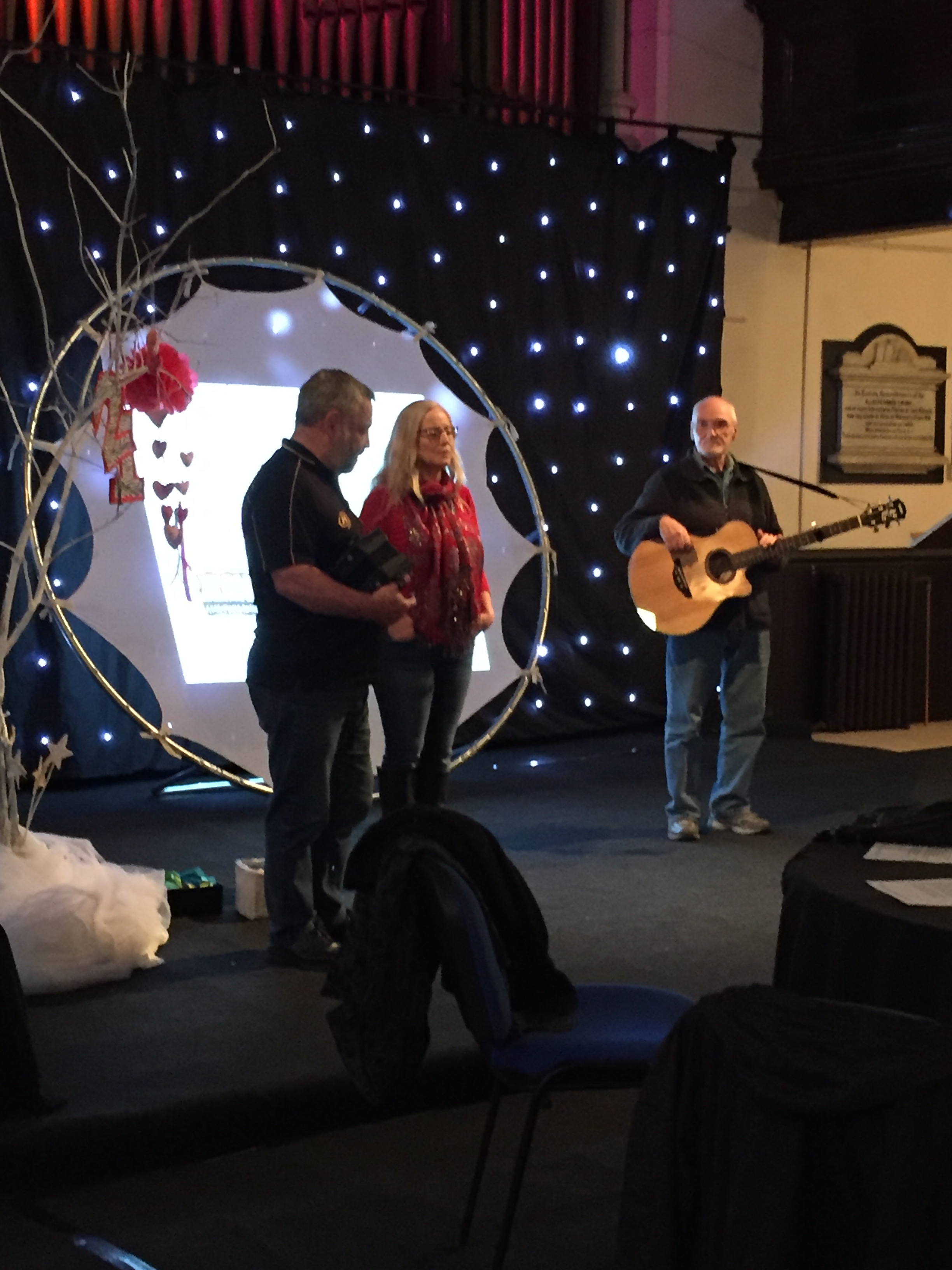
The afternoon was finished off nicely with celebratory tea, prosecco, cakes by Chloe, Northumbrian tunes from Jacqui, Jim and Da, and 21 photo memories from Headway Arts’ history.

Wish you had been there? Take a look at our photos and have a watch here:  https://www.youtube.com/watch?v=G47z4dNUOd4

Antigone – Greece

ANTIGONE – Information and Documentation Centre on Racism, Ecology, Peace and Non-Violence is a non-profit organisation established in 1993 with head offices in Thessaloniki, Greece. ANTIGONE develops activities on anti-racism and non-discrimination, human rights, social ecology, peace and non-violent conflict resolution.

A recent project produced by ANTIGONE was Artability – empowering people with disabilities through art.

Part of the European Lifelong Learning Programme, Artability aimed to increase the social participation of people with disabilities and facilitate their access to cultural, recreational and vocational activities.

Artability had 4 European partners: ANTIGONE (Greece), Cogami (Spain), Tlab (Italy) and Valakupai Rehabilitation Centre (Lithuania). Their work together resulted in the creation of a handbook aimed to improve the adult education system. The handbook covered the methodology used, the activities and outcomes of the project as well as the analysis of the impact of art on the life of people with disabilities.

The main project activities included:
Weekly visual art workshops
Interactive/Online workshops on specific art techniques and guidance on how to organise a workshop
A final exhibition (which can be viewed virtually on the android app they developed)
An international exchange visit in Italy.

You can find out about all the activities they implemented and produced for the project by reading the Final international report Impact of Artability,

ANTIGONE also have a fantastic YouTube channel, where you can find several videos about projects with Roma youngsters, people with disability, migrant women, and about other activities about ecology, homophobia, and other issues.

Must-see videos are about their project Able ’20 which explores the employment of young people with disabilities.


Headway Arts

Hi A.R.T.S partners,

So we thought we’d kick off the introductions by telling you all about our Come on Down festival:

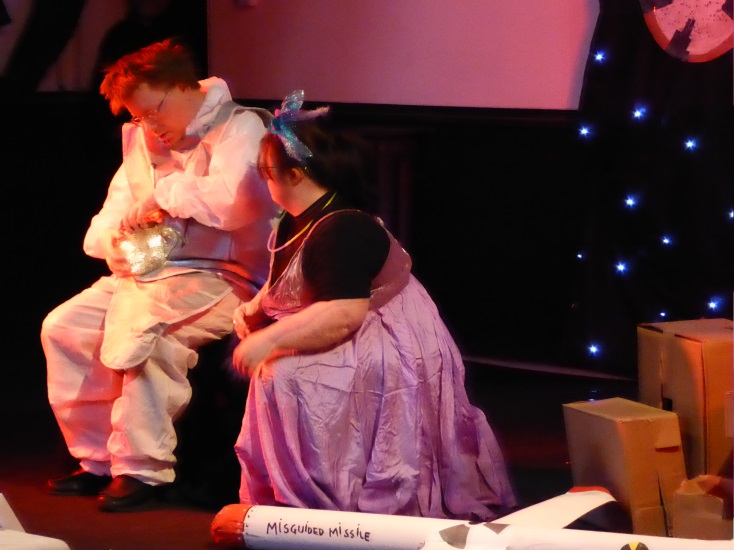
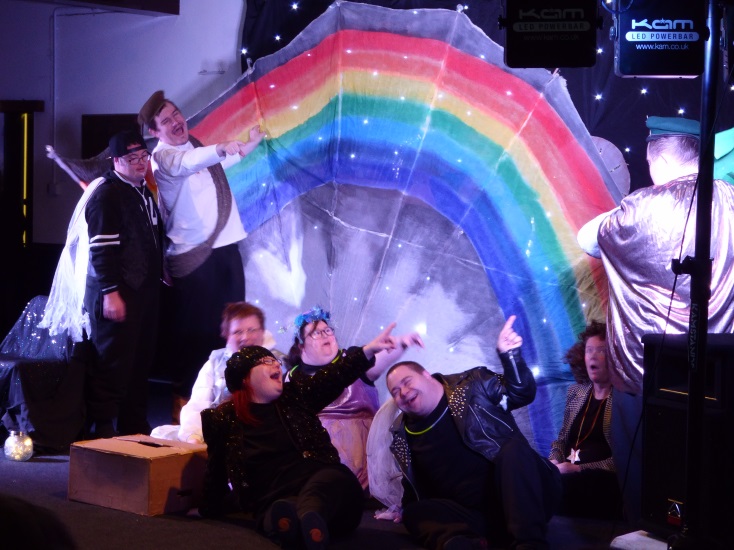
COME ON DOWN is the annual festival of performance and creativity for and by learning disabled people and now in its 10th year! Supported by Headway Arts and hosted by our resident learning disabled theatre company Seven Stars, the event took place in December 2015. It was attended by around 200 people with learning disabilities.

Disability arts companies, care centres, schools and community groups come to the festival to show and share the creative work they have been working on during the year. What makes the festival unique (and demonstrates our inclusive approach) is that people attend as both Performers and Audience. This means you come for the whole day to perform and to watch the performances by other groups, to share and learn and be inspired.

This year we had theatre, film, dance and movement performance, music and theatre workshops too. Here are some images:-

www.headwayarts.co.uk